EFL Pitch Conditions Triggering Shifts in Live Wager Strategies
Written by Nils Ludwig · Nov 22, 2026

EFL Pitch Conditions Triggering Shifts in Live Wager Strategies
Weather patterns and surface wear combine to alter ball behavior and player movement in EFL fixtures, prompting bookmakers to recalibrate in-play odds as matches unfold, while data from multiple European sports monitoring agencies shows measurable impacts on scoring rates and disciplinary outcomes. Observers note that rainfall in particular slows the ball and increases slip risk, forcing adjustments in real time for markets tied to goals, cards, adn corners.
Key Variables at Play
Grass length, moisture levels, and prior fixture congestion shape how the ball travels and how players maintain balance, and researchers from the Journal of Sports Sciences have documented these effects across lower-league environments where grounds receive less frequent maintenance than top-flight venues. Temperature drops in late autumn further harden surfaces or create patchy frost zones, leading to unpredictable bounces that change expected pass completion rates. Those who track EFL data across seasons find that matches played on heavily used pitches after midweek fixtures show elevated foul counts because footing becomes less reliable.
November 2026 brings the first sustained cold snap across much of England, and figures from regional weather services indicate higher precipitation totals for the month compared with the five-year average, which accelerates the need for rapid odds recalibration during live play.
Real-Time Adjustments in Action
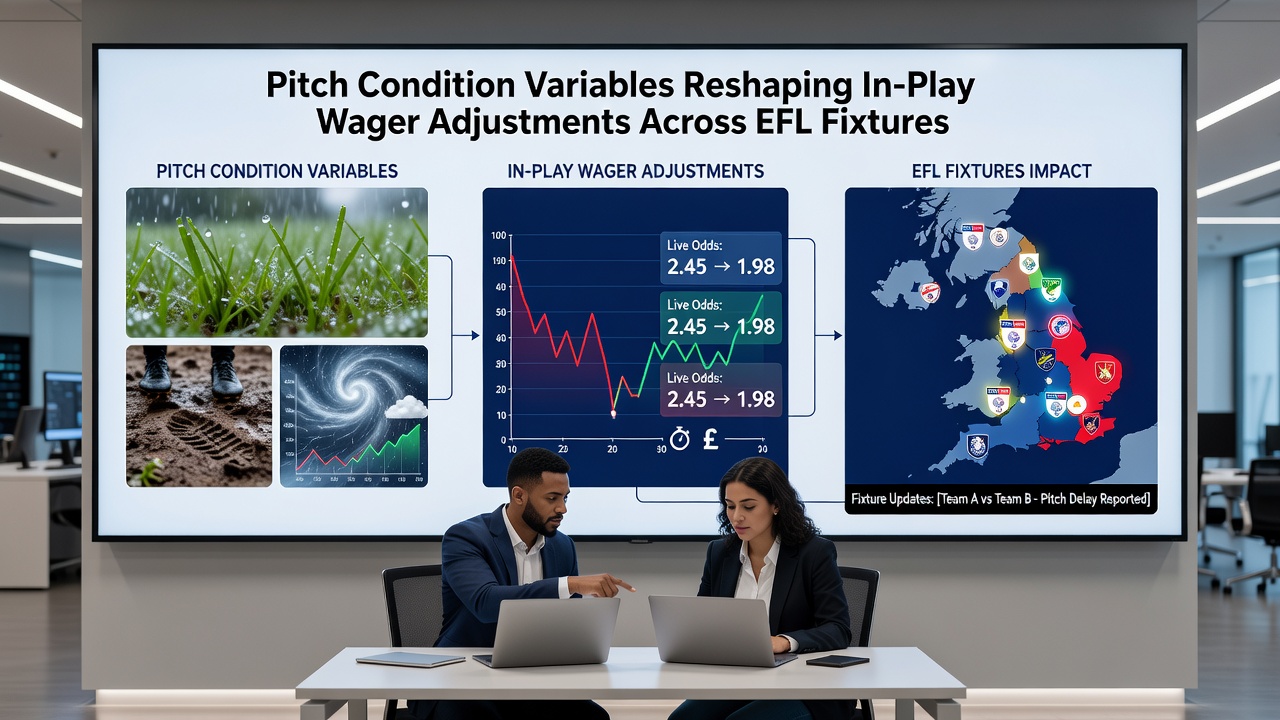
Bookmakers monitor pitch reports from grounds staff and integrate them with live statistics on ball speed and player tracking, then shift prices on next-goal markets or total corners within minutes of noticeable changes in conditions. A side trailing on a waterlogged surface may see its price lengthen sharply once the ball begins to stick in patches of standing water, whereas a counter-attacking outfit benefits from shorter odds if the same conditions hinder structured build-up play. Analysts at the International Betting Integrity Association have recorded instances where sudden downpours produced a 15-20 percent swing in implied probabilities for over-2.5 goals within a single half.
Division-Specific Patterns
Championship grounds often feature hybrid grass surfaces that drain faster yet still cut up after heavy rain, whereas League Two venues with natural grass show more pronounced slowing effects that favor teams comfortable playing direct football. Data compiled by university sports laboratories in Canada demonstrates that lower-division sides adapt their pressing intensity more slowly when surfaces deteriorate, resulting in fewer high-quality chances and a corresponding tightening of live handicap lines. Observers tracking relegation battles note that teams fighting to stay up sometimes adjust their in-play stake distribution toward card markets when pitches become slippery, since sliding challenges increase.
Case Examples from Recent Rounds
One November 2026 fixture between two mid-table League One sides saw the home team concede an early goal on a firm pitch, yet after a prolonged rain shower the away side's price for the next goal shortened dramatically because the ball began to hold up in the final third. Similar patterns emerged in Championship matches where grounds crews struggled to clear standing water at half-time, prompting live bettors to pivot toward under-total-corners wagers once play resumed on a heavier surface. These shifts occur because algorithms used by betting operators incorporate pitch-sensor data alongside traditional performance metrics.
Conclusion
Pitch condition variables continue to influence in-play wager adjustments across EFL fixtures because they directly modify the underlying probabilities that drive odds. As monitoring technology improves and grounds data feeds become more granular, operators and bettors alike respond to surface changes with greater precision, and evidence from multiple research bodies confirms that these environmental factors produce repeatable effects on match outcomes and market movements.